
今天学习任何东西,既容易,又让人迷糊。
容易,是因为 AI 几秒钟就能解释几乎任何内容。
迷糊,是因为大多数人只是随便提问,得到随便的答案,然后以为自己学会了。
一周之后,什么都没留下。
问题不在 AI。
问题在你使用它的方式。
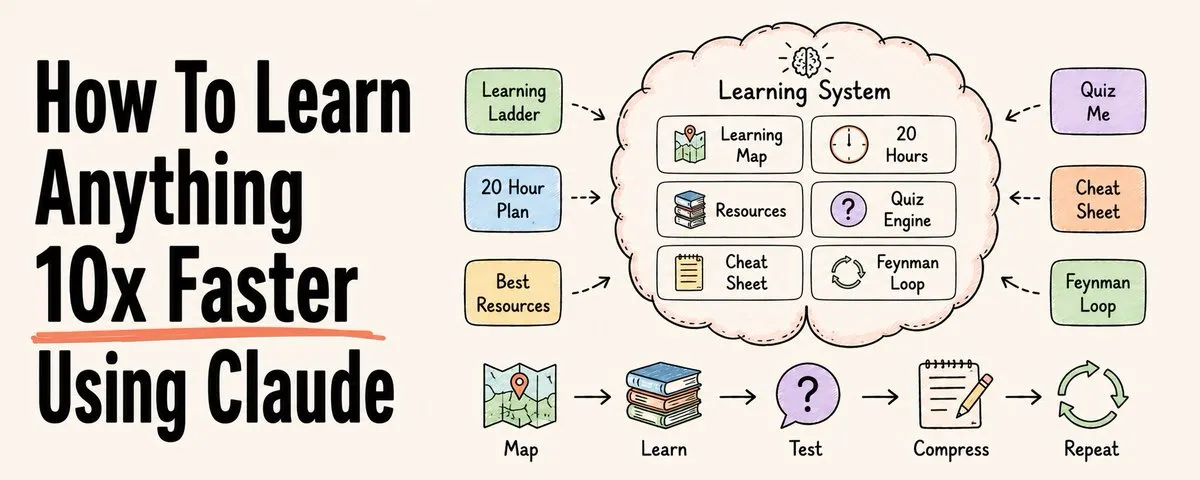
下面这 6 条提示词,可以把 Claude 变成你的私人老师、考官、资源筛选器和学习伙伴。
它们不是用来拿答案的。
它们是用来真正学会东西的。
保存这篇。以后每学一项新技能,你都会用到它。
为什么随便提问没用
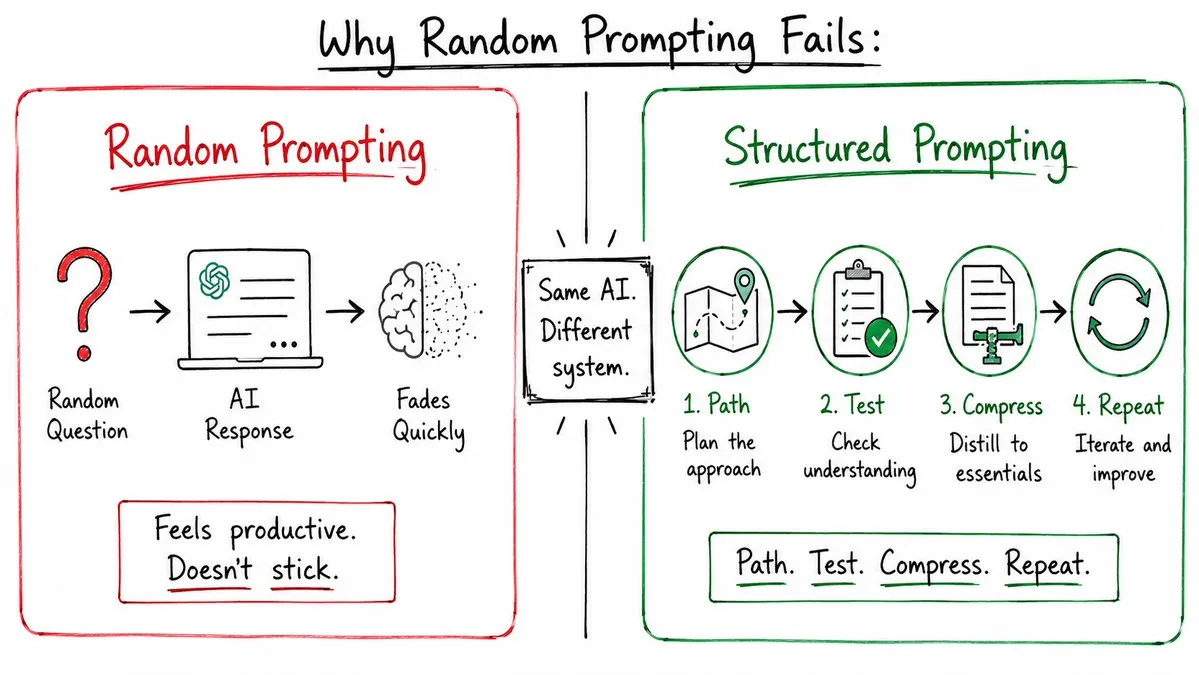
你问 Claude:“解释一下量子计算。”
它给你一个不错的回答。
你聪明了 10 分钟。
然后什么都没留下,因为没有结构,没有测试,没有重复,也没有反馈循环。
真正的学习需要 4 件事,而 AI 对话通常会跳过它们:
→ 一条路径,让你知道应该按什么顺序学什么
→ 一次测试,让你发现自己其实还不知道什么
→ 一次压缩,让你在真正需要使用前快速复习
→ 一个反馈循环,让知识缺口被立刻发现并修正
下面每条提示词,都会搭建其中一个环节。
1. 构建学习阶梯(清楚知道自己在哪里,以及下一步该做什么)
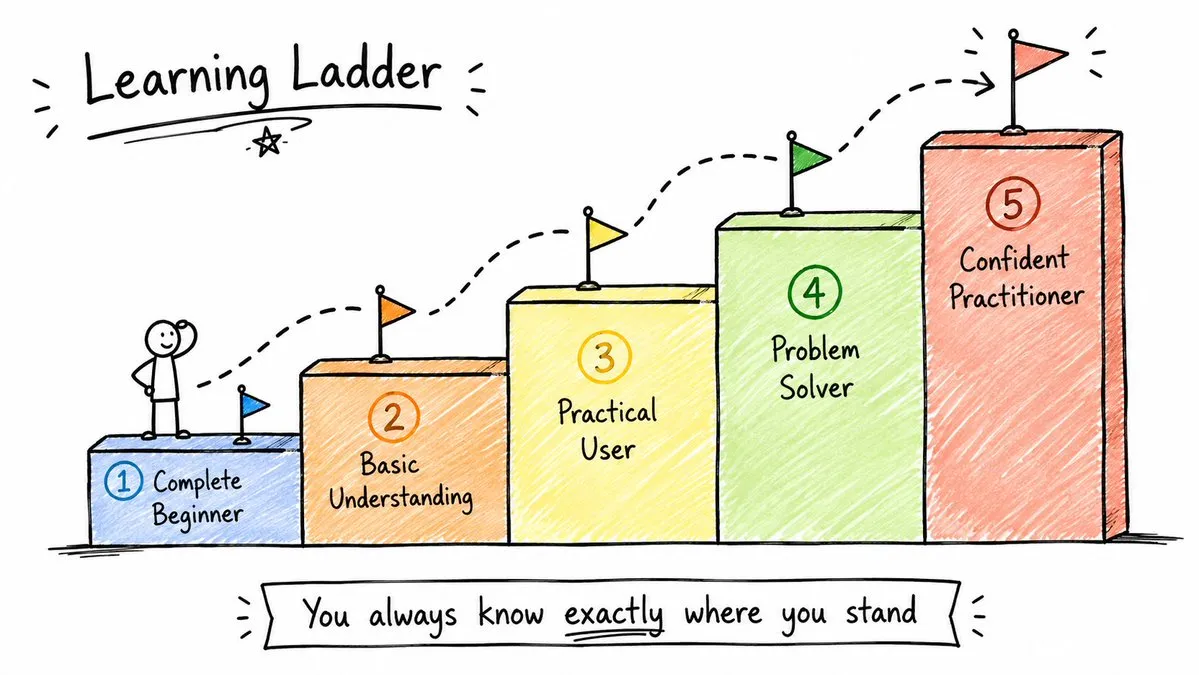
大多数人学习失败,是因为基础还没打牢,就直接跳进高级材料。
这条提示词会把任何主题拆成 5 个清晰难度层级:从完全新手到能自信实践。每一层都有里程碑和自测问题。
你会始终清楚自己处在什么位置。
I want to learn [topic] step by step, without skipping important foundations.

Act like an expert teacher and skill coach. Break [topic] into 5 clear difficulty levels, from complete beginner to confident practitioner.

For each level, include:

1. Level name
2. What I should understand at this stage
3. What mastery looks like at this level
4. The most important concepts or skills to focus on
5. One milestone that proves I am ready to move forward
6. One hands-on exercise or mini-project
7. Common mistakes learners make at this level
8. A simple self-check question before moving to the next level

Structure the levels like this:
- Level 1: Complete Beginner
- Level 2: Basic Understanding
- Level 3: Practical User
- Level 4: Problem Solver
- Level 5: Confident Practitioner

Keep the explanation practical, beginner-friendly, and focused on real progress.2. 用 20 小时学会任何东西(找到任何技能里的 80/20,并组织成 10 次学习)
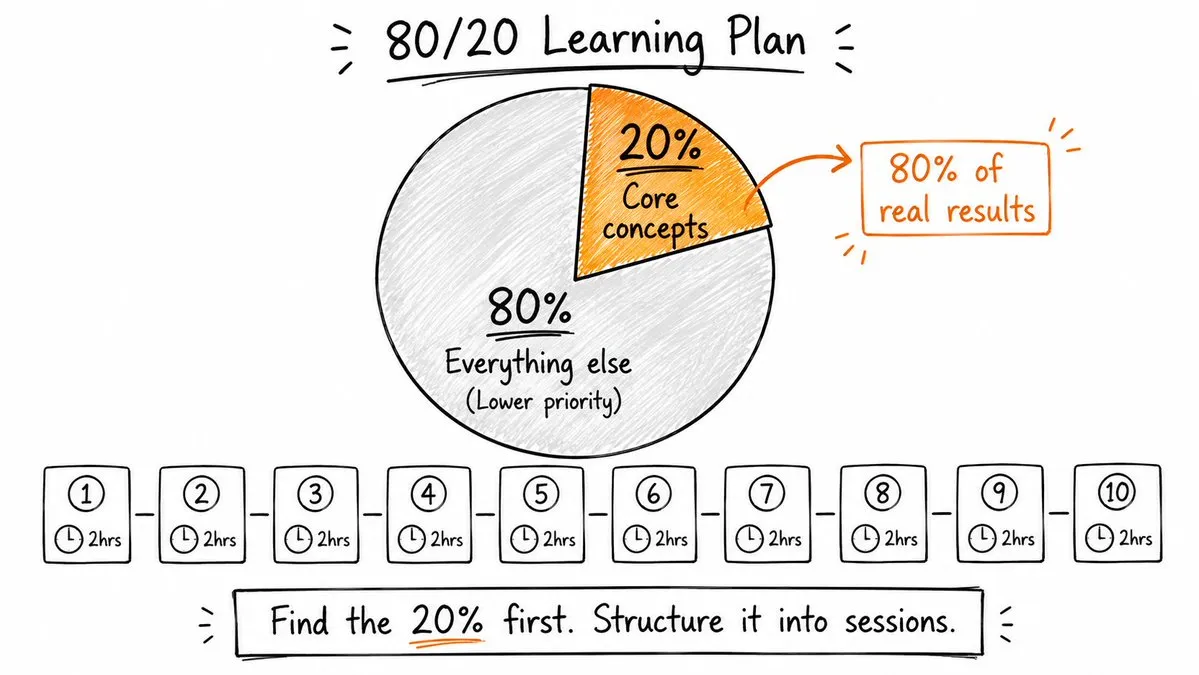
大多数主题都有一小组关键概念,能解锁后面的所有内容。
这条提示词会先找出那最核心的 20%,再把它变成一个 10 次学习计划,每次 2 小时,并为每次学习配好练习、资源和复习问题。
I want to learn [topic] in 20 focused hours.

Act like an expert teacher and learning strategist. Your job is to help me learn the most useful parts first, not everything.

Please do the following:

1. Identify the 20% of concepts, skills, or principles that will give me 80% of the real-world results.
2. Explain why these core areas matter and how they connect to practical use.
3. Create a 10-session learning plan, with each session lasting 2 hours.
4. For every session, include:
   - Main learning goal
   - Key concepts to study
   - One practical exercise or mini-project
   - One recommended resource, preferably free or beginner-friendly
   - Expected outcome after completing the session
5. At the end of each session, give me 5 review questions to test my understanding.
6. After the full plan, suggest one final project that proves I understand the topic well enough to use it in real life.

Keep the plan beginner-friendly, practical, and focused on fast progress.3. 不断出题考我,直到我答不上来(精准找出你的知识盲区边界)
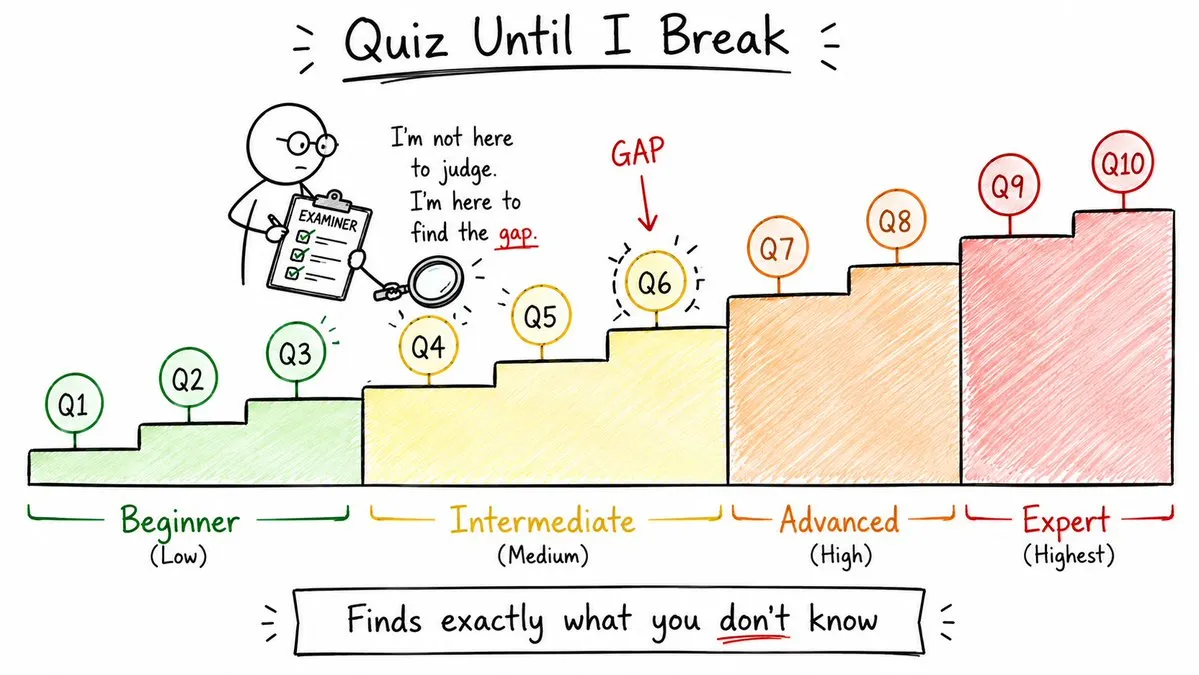
被动阅读会让人感觉很有效率。主动回忆才会揭示真相。

这条提示词会把 Claude 变成严格但有帮助的考官:一次只问一个问题,给每个答案打分,指出确切缺口,并只重新解释你漏掉的部分,难度还会逐步提升。
I just studied [topic], and I want to test how well I really understand it.

Act like a strict but helpful examiner. Your job is to find the edge of my understanding through active recall.

Start by asking me 10 questions, one at a time.

Rules:

1. Make the questions progressively harder:
   - Questions 1-3: beginner level
   - Questions 4-6: intermediate level
   - Questions 7-8: advanced level
   - Questions 9-10: expert level

2. Ask only one question at a time and wait for my answer.

3. After each answer, do four things:
   - Grade my answer out of 10
   - Tell me what I got right
   - Identify the exact gap, mistake, or weak point
   - Re-explain only the part I missed in simple language

4. If my answer is weak, ask one follow-up question before moving on.

5. If I answer well, increase the difficulty slightly.

6. At the end, give me:
   - My final score
   - My strongest areas
   - My weakest areas
   - A short revision plan
   - 5 final challenge questions to master the topic

Do not give me all answers at once. Make this feel like a real learning interview.4. 生成一页速查表(大脑更容易记住结构,而不是长段文字)
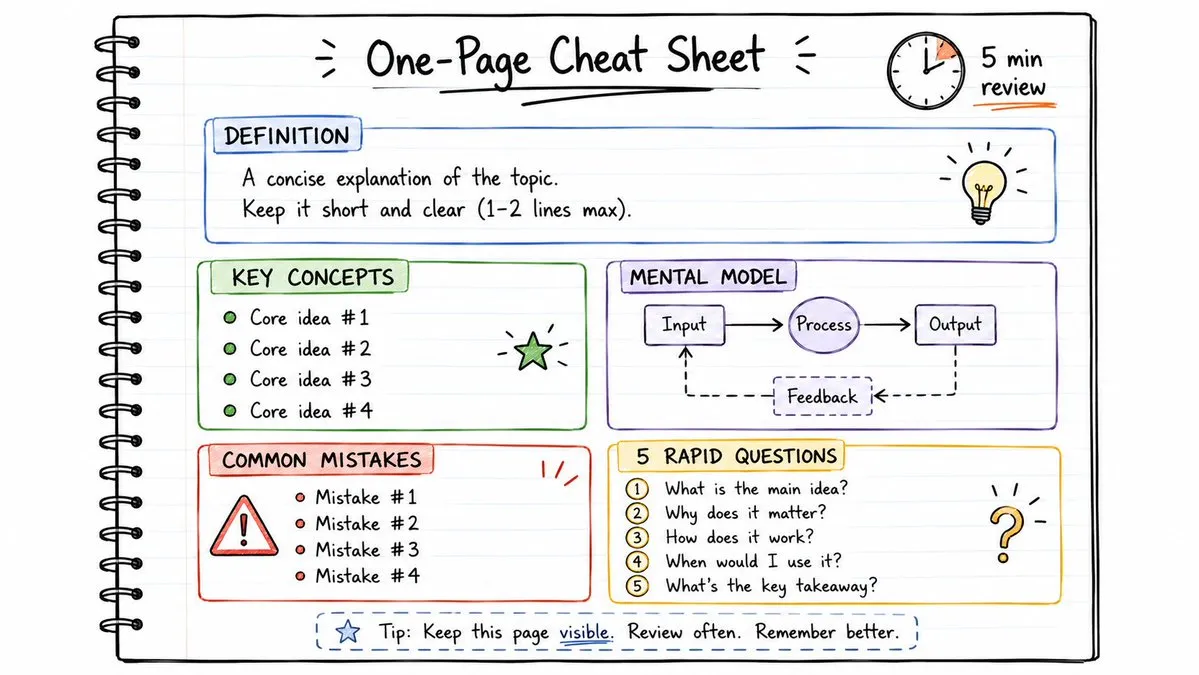
这条提示词会把任何主题压缩成一页内容,让你能在 5 分钟内完成复习:定义、规则、例子、常见错误和快速测试题,全部用易扫读的要点呈现。
适合考试、会议、面试前使用,也适合任何你需要快速用上某个主题的真实任务。
I want a one-page cheat sheet for [topic].

Act like an expert teacher who can simplify complex ideas into a fast review sheet.

Create a cheat sheet that I can review in 5 minutes before I need to use the topic.

Please include:

1. A short definition of the topic in simple language.
2. The most important concepts, rules, formulas, or steps.
3. Clear bullet points instead of long paragraphs.
4. A simple labeled diagram, flowchart, table, or mental model if it helps explain the topic.
5. 3-5 concrete examples that show how the topic works in real life.
6. Common mistakes or confusing parts I should avoid.
7. A quick "Before You Use This" checklist.
8. 5 rapid-fire questions to test my memory.

Keep it practical, visual, beginner-friendly, and easy to scan.5. 从噪音中找信号(停止收藏资源,开始使用真正有用的 5 个)
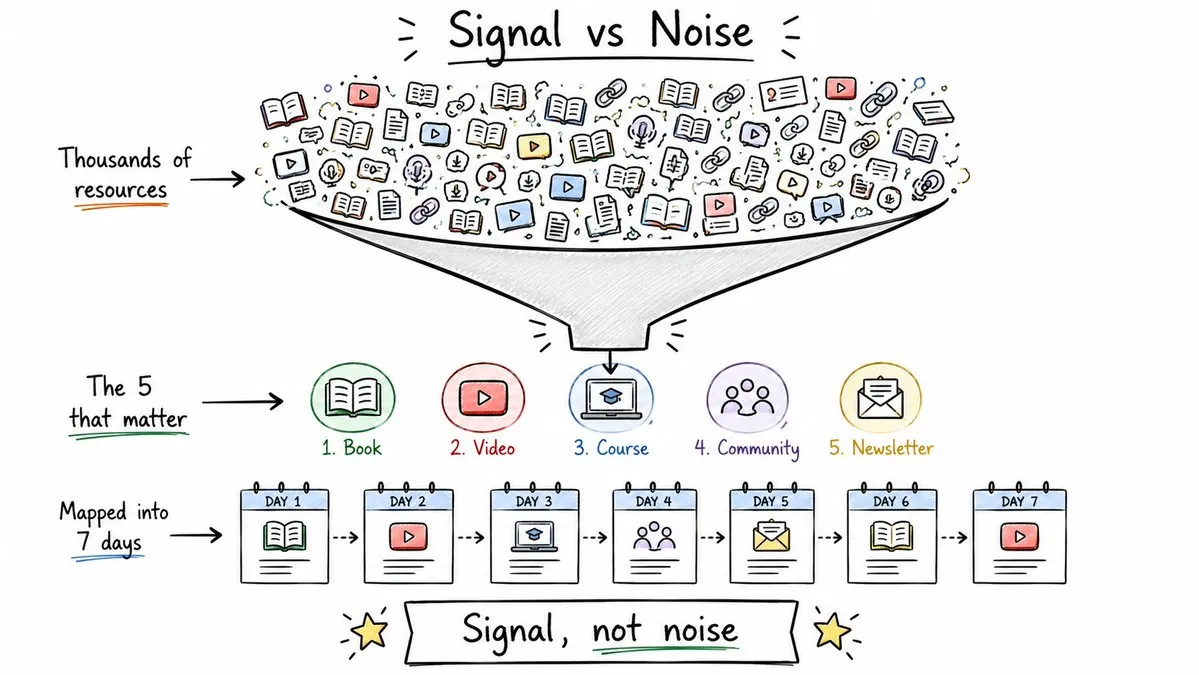
每个主题都有成千上万的资源。大多数人把时间浪费在收藏上,而不是学习上。
这条提示词会找出 5 个最高杠杆的资源,包括书、视频、课程、社群等;然后对它们排序,并只用这 5 个资源搭建一条 7 天学习路径。
I want to learn [topic] fast, but I do not want to waste time on low-quality resources.

Act like an expert learning curator. Find the 5 highest-leverage resources for learning [topic].

The resources can include books, videos, courses, websites, newsletters, communities, or experts to follow.

For each resource, include:

1. Resource name
2. Type of resource
3. Why it is worth my time
4. What specific part of [topic] it helps me learn
5. Best learner type for this resource
6. Difficulty level: beginner, intermediate, or advanced
7. How I should use it effectively
8. One warning about what not to waste time on

After the list, rank the resources in the best order to use them.

Then give me a simple 7-day learning path using only these resources.

Focus on quality, clarity, and practical usefulness. I want the signal, not the noise.6. 使用 Feynman 循环(如果你不能简单解释,就还没有真正理解)
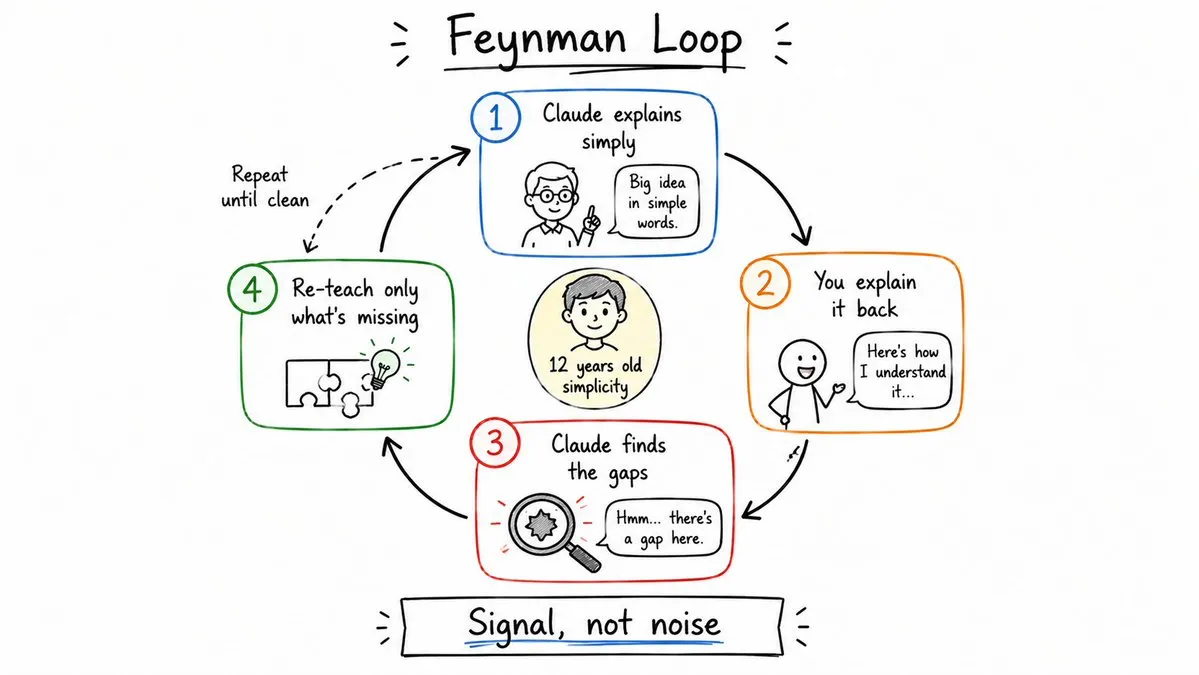
Feynman 方法几乎能立刻暴露假的理解。
Claude 先像给 12 岁孩子讲一样解释主题;你再用自己的话讲回来;Claude 找出每个缺口,并只重新讲你漏掉的部分。这个循环会一直重复,直到你的解释清晰准确。
I want to understand [topic] deeply using the Feynman learning method.

Act like a patient teacher. First, explain [topic] to me in simple language, as if I am 12 years old.

Use:
- simple words
- real-life examples
- analogies
- no unnecessary jargon
- short explanations

After explaining, ask me to explain the topic back in my own words.

Then review my explanation and do the following:

1. Identify what I explained correctly.
2. Find every gap, mistake, confusion, or missing idea.
3. Re-teach only the parts I got wrong or missed.
4. Ask me to explain it again in a cleaner way.
5. Repeat this loop until my explanation is simple, accurate, and complete.

Rules:
- Do not move forward until my explanation is clear.
- Do not overload me with extra theory.
- Correct me gently but clearly.
- Use examples whenever I am confused.
- At the end, give me a final clean explanation of [topic] that I can save as notes.

Make this feel like an interactive learning conversation, not a lecture.如何把这些串起来
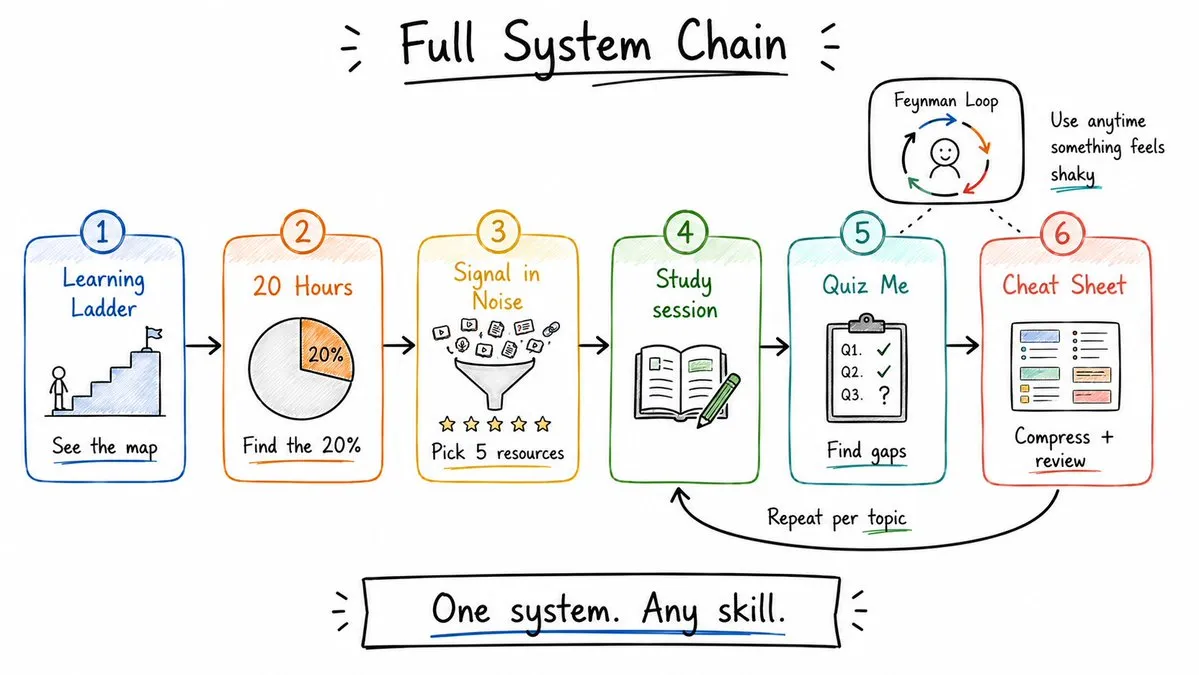
这不是 6 个彼此独立的小技巧。它们是一套学习系统的不同阶段。
→ 先用 学习阶梯 看清整张地图
→ 用 20 小时学习法 找到最值得优先投入的核心 20%
→ 每次学习结束后,运行 一直考我,直到暴露短板,找到真实缺口
→ 把已经学到的内容压缩成 一页速查表,方便快速复习
→ 在开始前先用一次 从噪音中找信号,选出你的 5 个资源
→ 对任何仍然不稳的部分,运行 Feynman 循环
路径 → 测试 → 压缩 → 重复。
这就是整套系统。
为什么这真的有效
大多数 AI 学习对话,只是在没有结构的情况下给你答案。
这套系统会强制引入真实学习过程需要的 4 件事:
一条路径,让你永远不会迷失,不知道下一步该学什么。
一次测试,让你在代价出现之前发现自己不知道什么,而不是等到考试、面试或真实项目里才暴露。
一次压缩,让复习只需要 5 分钟,而不是重新读完所有内容。
一个反馈循环,让缺口被及时发现并修正,而不是悄悄堆积。
AI 不会因为给出更好的答案,就自动让你成为更好的学习者。
只有当你强迫它测试你、帮你压缩、纠正你时,它才会让你成为更好的学习者。
如果这对你有用:
→ 转发给任何正在学习新东西的人
→ 关注 @sairahul1,获取更多能在你睡觉时运行的系统
→ 收藏这篇,把 [主题] 换成任何内容,今天就运行
我写 AI、产品构建,以及那些不需要你盯着也能运转的系统。
📎 原文信息
原帖链接:https://x.com/sairahul1/status/2068250224532050089
